The role of road captain is little understood, but its greatest exponents are among the most established names in the peloton: Eisel, Paolini, Rogers, to name just three.
It is at once a position of great responsibility and total subservience, fulfilled by a shifting cast selected on a race-by-race basis both for their suitability for a given event and for their relationship to the rider that the team hopes will win it.
The captain must combine physical strength with tactical acumen, be utterly unafraid of his rivals and even team-mates, whom he must bend to his will in service of his leader.
He is simultaneously the messenger from the team car and the rider calling the shots. If the pre-race plan is implemented successfully, the credit belongs to the DS; if it goes wrong, it is the road captain who is likely to feel the ire of his colleagues.
Captain, my captain
First things first: cycling’s use of the phrase ‘captain’ is different to that of other sports. He is unlikely to be the winner, or to have gained the role as a result of personal success. He is not the goal scorer or opening bat.
David Millar explains: “Occasionally, you’ll have a road captain there to maintain the direction of the team, but road captains in cycling are very different to captains in other sports where they’re figureheads who give inspirational speeches and rally the troops. Road captains in cycling are there to do a job. They’re very functional and can be disposed of very easily if you buy in a new leader next year.”
One volunteer is worth ten pressed men
A rider is unlikely to have set out to become a captain, in Juan Antonio Flecha’s view; rather, it is a role gained more typically by accumulation of experience. “Becoming a road captain is something that you probably don’t plan,” the former Sky rider explains. “All of a sudden you have a lot of experience, you know the riders; the young riders especially, they like to listen to you. You find yourself doing that role.”
Meet Juan Antonio Flecha at Rouleur Live 2021
Related - Who to expect at Rouleur Live: See cycling's greatest stars this November
The first hurdle a DS must overcoming in selecting a captain is finding a rider willing to play the role. All three of our panelists stress the extra responsibility heaped upon the road captain, both for his own decisions, and frequently for those made in the team car. “The DS is not always aware of what is going on in the bunch,” Flecha explains. “The captain takes responsibility in the bunch sometimes for errors or faults.”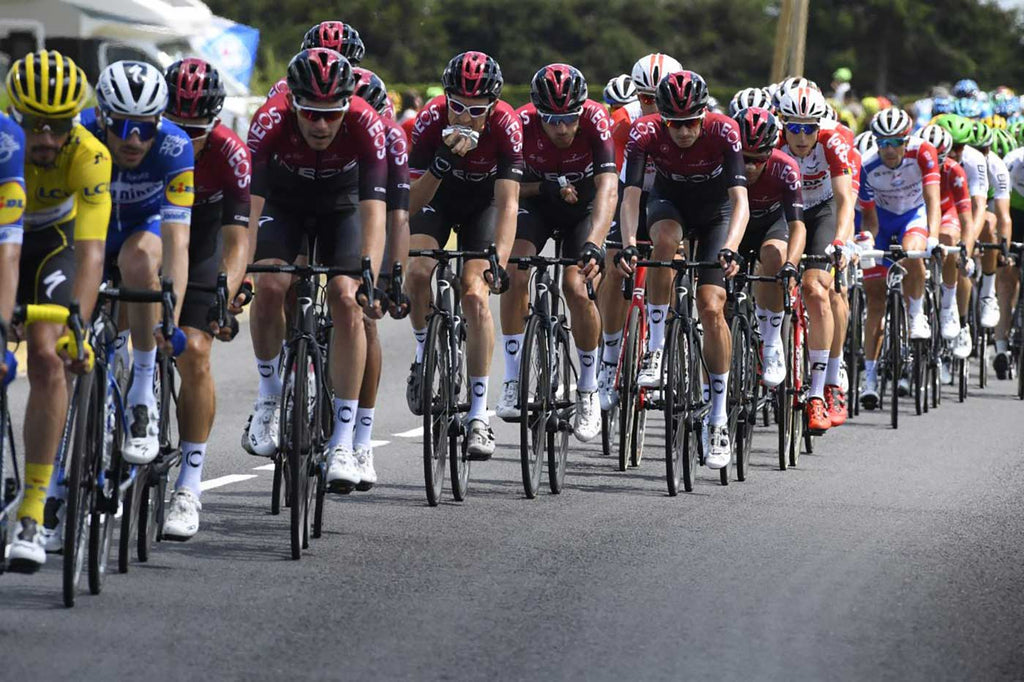
Personal matters
The personal traits required of a captain are broad, if the varied opinions of our panel are a guide. Hammond cites Bernie Eisel, a rider whose versatility is likely to see him selected for races as diverse as Milan-Sanremo and the Tour, and possessed of a personality sufficiently robust to ensure the entire team is on message with the DS.
“It takes a special mentality to be a road captain,” Roger Hammond says. “That’s the important thing. You have to not care about anybody else. You’ve just got to care about what happens on the road. You’re going to sacrifice a lot of people, and they’re supposed to be friends, or working colleagues. You’re going to have to give them something to do that’s not going to please them and ruin their day, basically.”
Luca Paolini, however, is a rider whose undoubted success as road captain has been attained by savoie faire rather than by blunt application of will, according to Millar, and from a recognition that his greatest skill lies in guiding stronger team-mates to victory. An absence of ego makes the Italian ideally suited to the role, Millar believes: “I wouldn’t say Paolini has a big personality. He’s just very good at doing his job.”
Avid reader
The road captain’s ability to read a race is perhaps his principal talent: to react accordingly as events unfold; to deliver the pre-race strategy while it remains appropriate, but to move decisively when it is disrupted by the ambitions of competing teams and the hundreds of other riders contesting the race.
“Road captains read races,” Millar says. “They see what happens. Often because they’ve got their heads kicked in so many times, they know when to economise effort, when not to panic. That’s essentially the primary role of a road captain in cycling – not to panic, and to know that it’s going to get better.”
“I think certain guys learn to enjoy reading races,” he continues. “I enjoy reading races and anticipating what’s going to happen next: what other teams are doing, who’s going to play against each other; what directeur sportifs have already planned, what the leader will do. Generally, a certain type of road captain is always intrigued by the race, but then wants to share it.”
Local knowledge, global view
Both Hammond and Flecha stress the importance of understanding the shifting dynamic of the peloton. For Flecha, this means paying close attention to the evolution of the race and being able to shift strategy accordingly. “It’s being aware of everything surrounding you, [of] having a global view,” he says. “If you focus entirely on your plan and not what’s going on around you, then probably your plan is not going to work.”
“They soak up the ‘local knowledge’ – daily knowledge of who’s in form, who’s motivated,” he says. “Listening to other riders, you get an idea of who’s been training hard in the winter for the early season races, or who’s been training for other things. Motivation and daily form are almost as important as the race tactics.”
Stronger than most
The road captain’s ability to read a race does not give him the luxury of an easy ride. He must be well-placed to react to the shifting dynamic of the race, and be strong enough to keep pace with the man for whom his efforts are made: the leader. Bad days are not an option.
“The stronger you are, the better, because, firstly, you are showing your team-mates that you are in good shape,” Flecha explains. “The better you are physically, the longer you will stay with your team leader, which is very important. You cannot be a good road captain and be sat at the back of the bunch all day. It’s not going to work. You have to be in great condition.”

On my radio
The role of the road captain in an age of race radio divides two of our panelists. For Hammond, two-way transmissions have diminished the role; for Millar, they have heightened it. Both men offer credible reasons for their differing views.
“Radios have made the role more important,” Millar says. “He [the road captain] has to be in communication with the DS. If the radios aren’t working, he needs to find out why the radios aren’t working. Before radios, it was the DS. The riders could deny everything or club together and say, ‘We did our job, you made the wrong decision.’”
As the manager of a UCI Continental team, a tier in which radios are not used, Hammond is keenly aware of the danger in which a rider is placed when his only method of communication with the DS is to drop back through the race convoy. He speaks passionately in favour of race radio as a safety measure, but believes its existence means that road captains in the WorldTour “are not really road captains anymore”. The road captain’s influence, he believes, has been diluted.
“Those are different decisions now, because there’s always someone on the race radio – when it’s working – saying, ‘Here’s the deal’; sat in an air conditioned car with a heart rate of about 45bpm saying this, this, and this. The road captain sometimes argues with him and says, ‘I’m on my limit now, I can’t attack, what are you on about?’ but invariably, it’s just passing on what’s being said in the team car and being the voice of reason with the rest of the riders. The road captain is more the person who has a great relationship with the directeur sportif.”

Captaining the country
Millar’s career was not without significant personal success – stage wins in all three Grand Tours, to name only one aspect – but perhaps his greatest triumph in the role of road captain came in the colours of Great Britain at Copenhagen in 2011, where he guided a formidable squad that propelled Mark Cavendish to victory in the World Championships.
“I guess I was the person who had to implement a job that had been years in the making by Rod Ellingworth and Dave Brailsford,” Millar reflects. “When it came to those six hours, they needed somebody out there to action everything they’d planned. That was the job. I’d done none of the tactical work, but when it came to the day, I was the person who had the responsibility.”
Juan Antonio Flecha will be speaking at Rouleur Live 2021, tickets are available here